Why Does Skin Age? The Biology Behind It
From great lines to loss of flexibility, the changes your skin undergoes are influenced by a mix of elements, both within and outside your control. With informed treatment and the best techniques, you can focus on preventing skin aging and preserving a youthful, glowing skin. These compounds bind and upregulate collagen and elastin gene expression in facial fibroblasts.Facial Activities And Wrinkle Development
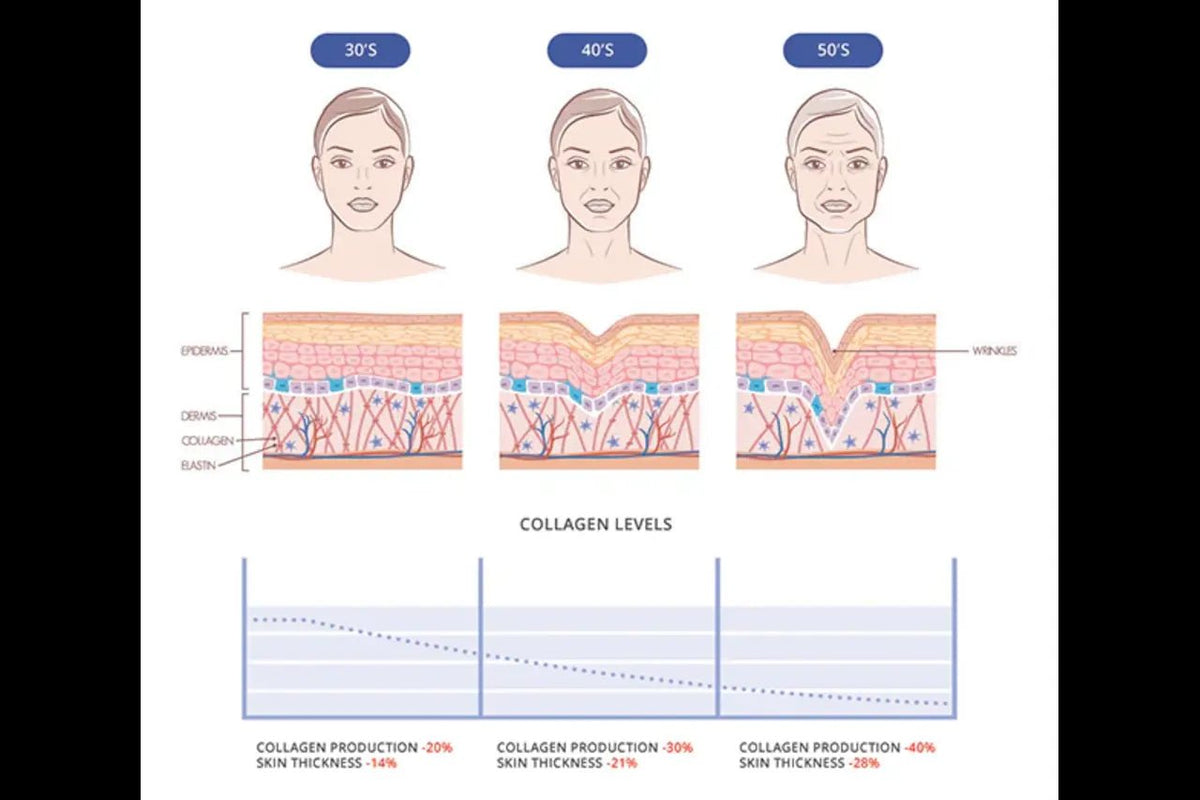
As we age, the stem cells and fibroblasts that are accountable for generating collagen, elastin, heparan sulfate, and hyaluronic acid gradually come to be "careless" or underactive. Therefore, our skin starts to produce less and less of these important parts, contributing to lines, wrinkles, and thinning skin. Repeated facial expressions and face activities, such as scrunching up your eyes or smiling, causing great lines and creases.
Summertime Skin Problems You Can Avoid
Each time a face muscular tissue is made use of, a temporary groove kinds beneath the surface of the skin. As skin ages, its levels of elastin and collagen diminish, triggering the skin to shed its adaptability and capacity to bounce back into area complying with face motions. In time with age, these short-lived grooves end up being long-term functions on the face. Among the most significant targets of senomorphic representatives is the mechanistic/mammalian target of rapamycin (mTOR) pathway, which regulates mobile metabolic process and is connected to mobile development, spreading, and autophagy (Papadopoli et al., 2019). The mTOR path is likewise involved in the synthesis of SASPs (Cayo et al., 2021). Rapamycin, an mTOR inhibitor, exhibited significant reduction in senescence markers and SASPs along with oxidative mobile anxiety in UV-induced photoaged human dermal fibroblasts (Bai et al., 2021).Can You Really Avoid Skin From Aging?
A disrupted barrier leaves skin prone to the damages brought on by external assailants, affecting skin health and wellness and accelerating ageing. Genetics accounts for about 50% of wrinkle development, establishing your baseline aging price. The remaining 50% is formed by lifestyle and environmental exposures, implying behavioral options have a quantifiable influence on just how your skin ages. What the 2026 study from The EMBO Journal explains is that skin aging is a systemic failure, not a surface shortage. The gut-skin axis, epigenetic drift, and inflammaging are not edge ideas. Yet the discussion in a lot of skincare aisles is still dominated by moisturizers and products that deal with maybe one layer of a five-layer problem.
- It is created with extract of natural mirabelle plums, rejected throughout sorting, and aloe vera juice which assists the skin fight against cost-free radicals in charge of premature aging." Melasma, blemishes, actinic keratoses and texture modifications are all indicators of photoaging damages," claims Dr. Palm.Over exposure to the sun-- together with improper or insufficient sun security-- represent greater than 80% of early skin ageing.When direct exposure to external stressors (like UV radiation, poor diet plan, or chronic stress and anxiety) increases telomere reducing, you experience early, external aging.The web content on this page is for general informational and educational functions just and is not planned as clinical suggestions, a recommendation, or an endorsement of any type of certain medication, treatment, or health and wellness item.
They enhance obstacle function by decreasing oxidative stress and anxiety and damage to keratinocytes and fibroblasts. Ultimately, they downregulate inflammatory cytokines such as IL-6 and TNF-alpha which both create matrix failure. Inherent aging is inevitable, but a lot of the noticeable aging you see in the mirror is not. UV light and sunlight direct exposure cause 90% of noticeable skin aging, a process skin doctors call photoaging.
Although rice cakes are frequently thought about a seemingly healthy treat, this is not real for the skin. Rice cakes have a high glycemic index and can create blood glucose levels to increase. Boosted blood sugar level degrees add to accelerated aging and can cause extra creases. Harsh foaming active ingredients in cleansers, too much exfoliation and peels off, bad sleep, and chronic stress are simply a few facets of our contemporary way of lives that adversely effect skin's obstacle. Epigenetics is the layer of biology that rests in between your genetics and your behavior.Dysbiosis, an inequality in digestive tract microorganisms, correlates with increased skin inflammation and increased aging. Hormonal modifications, particularly the decrease of estrogen during menopause, straight lower collagen synthesis and skin density. The most existing research study frames skin aging not as a collection of separated mobile failings but as an ecosystemic collapse spanning molecular, tissue, and systemic degrees. Discover why does skin age and learn the organic factors behind skin aging. For that reason, it is vital to keep an Learn here equilibrium of moisture to keep the skin healthy and younger. Making use of a humidifier during the winter months can help keep the air moist, while making use of a light-weight moisturizer during the warm summer months can aid maintain the skin hydrated.
Sun-induced cutaneous modifications differ substantially amongst individuals, mirroring integral Non-invasive body contouring distinctions in vulnerability to sunlight direct exposure and repair work ability. Also among Caucasians, the appearance of photoaged skin of people with skin phototypes I-- III typically varies from that of individuals with skin phototypes IV-- VI. Extrinsic ageing, such as photoageing, belongs to environmental elements. External ageing was first reported at the end of the 19th century, and was then called 'farmer's skin' or 'seafarer's skin'.